Sai Baba ❤ #sathyasai #saibhaķta 11 de novembro de 2017Saibhakta Brasil View on Instagram http://bit.ly/2mf3bbB
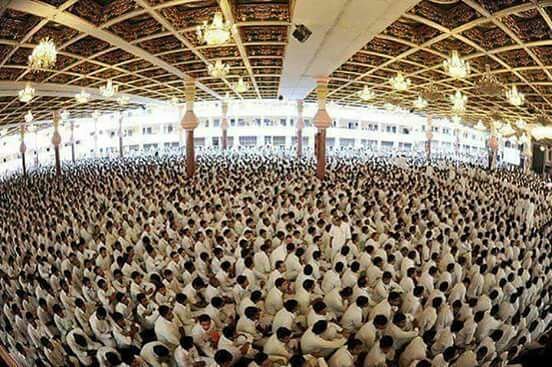
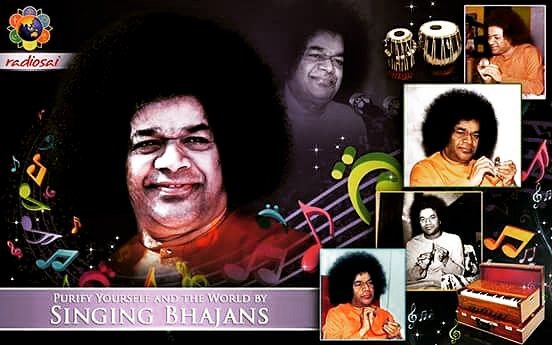
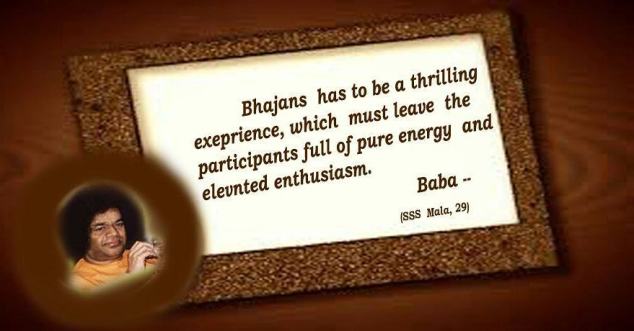
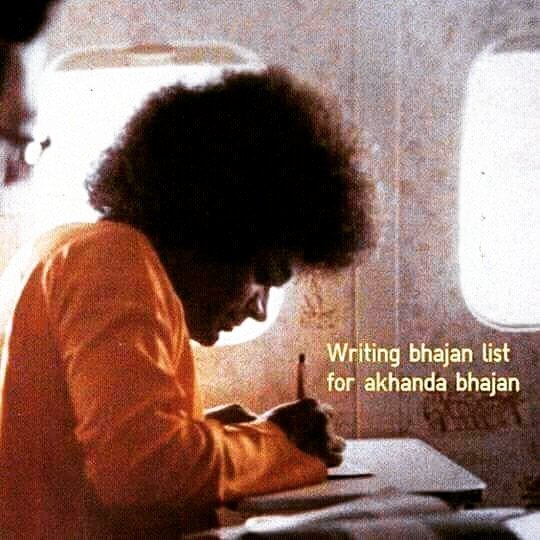
As part of the birthday celebrations of Bhagawan Sri Sathya Sai Baba, on the second Saturday-Sunday in November, Bhajans (devotional singing) are conducted continuously for 24 hours at all Sri Sathya Sai Centres on a global level praying for peace, harmony and bliss to all mankind. The significance of community singing is immense, according to Baba. It is the easiest way to reach God in the present age. Speaking on the efficacy of Bhajans, Baba says, “The spiritual vibrations produced by Bhajans confer great joy both on those who sing them and on those who hear the songs. Bhajans remove all negative thoughts, soothe the nerves, purify the mind and fill the body and the heart with sweet love for the divine. As one sings Bhajans, the mind is saturated with God Consciousness and a great ecstasy wells up from within. No mental or intellectual effort is called for, as there is no need to understand anything while uttering the holy names of God and singing His glory. The singing and the atmosphere created by Bhajans takes one beyond the realms of the body, mind and intellect and helps to establish communion with the Higher Self (consciousness) within. Therefore, singing Bhajans becomes a beautiful and blissful experience. Many great composers and musicians like Thyagaraja established communion with God through devotional music.” Excerpts from Bhagawan’s Discourses : “Today we are having the Akhanda Bhajan. This is being done not for the sake of one individual, one nation or one community. It is for the welfare of humanity as a whole. The bhajans that are sung permeate the ether in the form of sound waves and fill the entire atmosphere. Thereby, the whole environment is purified. Breathing in this purified atmosphere, our hearts get purified. Reciting the Lord’s name is a process of give and take. Singing the Lord’s name should become an exercise in mutual sharing of joy and holiness. It should be remembered that the sounds we produce reverberate in the atmosphere. They remain permanently in the ether as waves and outlast the individual uttering the sounds. Community bhajans should not be treated as a pastime. #sathyasai #saibhaķta 11 de novembro de 2017Saibhakta Brasil View on Instagram http://bit.ly/2hkrCyY
Singing for Sri Sathya Sai – By Balaramchandran T. S. Antharanga Sai – Sai, the indweller. The opening words of a Bhajan that has always been so close to my heart… Thinking about it my mind goes back to the days when I joined the Brindavan Campus of Sri Sathya Sai Institute of Higher Learning for the B.Com programme. To give you a snap shot of what I was then… a boy from a small town in Kerala, born in a joint family amidst loving grandparents, parents, uncles, aunts and friends. I grew up within the four walls of a local school – a haven of safety – where I did my entire schooling right from my kindergarten to the twelfth grade. And from this protected world where I was a little prince in my own right, I had moved to the new world of ‘Brindavan’, the Lord’s play ground or should I say the training ground; where He imparted the highest of lessons in the simplest of ways which He alone can. The pampered little boy that I was, I missed the warmth that I used to experience while at home with my large family and friends. This, in spite of the sincere love that my teachers, senior brothers and classmates were showering upon me. When I had left my home behind for the new world that ‘Brindavan’ was, my loving mother who knew I would miss her dearly had told me, “Dear child, I know you will miss me while you are in the Hostel. But remember that you are going to Swami who is the epitome of Love. He will bathe you in the love of a thousand mothers!” And thus I had landed in ‘Brindavan’ with a heart pining to receive from the Mother of mothers all the love and warmth that I had left back at home and even more. Those were the days when to me, the meaning of the word love was restricted to its physical expressions: like a smile, a pat, a loving glance, a few good words… I had even believed that Swami being the embodiment of Love would talk individually to all students and that too every day! But soon I realised that physical attention from Swami and that too on a daily basis was too much to ask for! I felt lost, to say the least. On one side I had come away from home and all the people who loved me so dearly, and on the other, the source of Love. #sathyasai 11 de novembro de 2017Saibhakta Brasil View on Instagram http://bit.ly/2yrELNy
“More Smiling, Less Worrying; More Compassion, Less Judgement; More Blessed, Less Stressed; More Love, Less Hate:- Be Divine” PRANAAM.“` #sathyasai #saibhaķta 11 de novembro de 2017Saibhakta Brasil View on Instagram http://bit.ly/2zy4W8O
When we participate in bhajans, with what attitude must we sing? Let us take Bhagawan’s loving guidance as we prepare for the Global Akhanda Bhajan tomorrow. There is no use counting seconds and minutes while doing namasankirtan (act of singing God’s name) thinking, ‘I have done namasankirtan for so many minutes and so many seconds’. Meera sincerely prayed to Lord Krishna, “Swami, I delved deep into the ocean and could get the pearl of Your divine name. Let not this valuable pearl slip from my hand and drop back into the ocean. Having been born in this world, let me sing the glory of the divine name constantly and sanctify my life!” Some people participating in bhajan say, “Today I am not well. I have a sore throat due to cough and cold. I am not able to sing.” True, you may be suffering from cold and cough. But, you can sing within yourself, surely. Do it. That will give you sufficient strength. The divine name is very sacred. (Divine Discourse, Nov 13, 2007) If you really yearn for God, repeat His name with the same devotion like Prahlada or sing His glory like Radha and Meera – BABA #Sathyasai #saibhakta 11 de novembro de 2017Saibhakta Brasil View on Instagram http://bit.ly/2iMAWvS
Why should we evaluate our desires time and again? Bhagawan lovingly answers this important question for us today. Develop discrimination and evaluate even your own needs and wishes. Examine each on the touchstone of essentiality. When you pile up things in your apartments, you only promote darkness and dust; so also, do not collect and store too many materials in your mind. Travel light! Have just enough to sustain life and maintain health. The pappu (a lentils dish) must have only enough uppu (salt) to make the dish tasty. Do not spoil the dish by adding too much salt. Similarly, life becomes too difficult to bear if you put into it too much desire. Limit your desires to your capacity and even among them, have only those that will grant lasting joy. Do not run after fashion and public approval and strain your resources beyond repair. Also live in accordance with the code of rules that regulate life or the stage you have reached. – Divine Discourse, Aug 19, 1964. #sathyasai #saibhakta 11 de novembro de 2017Saibhakta Brasil View on Instagram http://bit.ly/2ySETKf
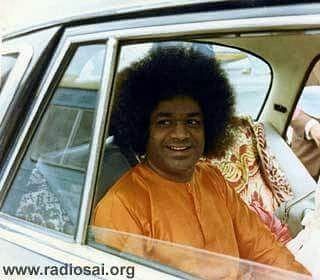
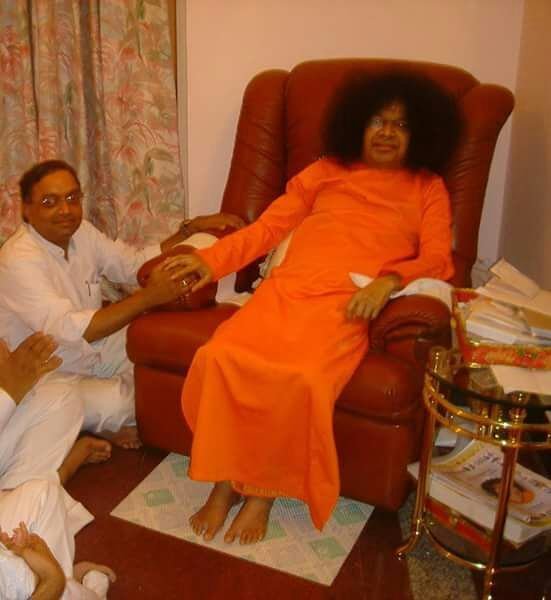
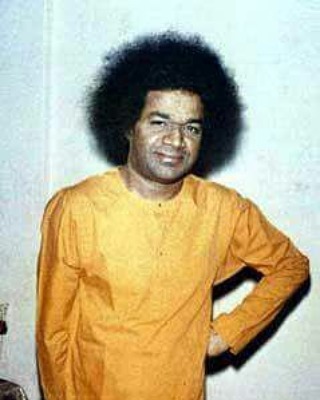
Beautiful Swami ❤❤❤ #sathyasai #saibhakta 11 de novembro de 2017Saibhakta Brasil View on Instagram http://bit.ly/2meGpAC
*The global devotional singing by Sai devotees all over the world.* *Akhanda-Bhajan means that it should not be just a twenty-four hour, or even a seven-day affair. It must go on from birth to death. Bhajan has to start in childhood and continue onward. It must be constant companion of man, his solace and strength. Do not postpone it until old age, for it is the essential food for the mind.* Akhanda Jyothi Jalao *Sai Man Mandir Me* Akhanda Jyothi Jalao.. *Koti Surya Sama Theja Swaroopa* Sai Thum Ho Divya Swaroopa *Akhanda Jyothi Jalao..* Divya Jyothi Gnana Jyothi Prema Jyothi Jalao.. Sai, light the eternal flame within the temple of our heart and illumine our intelligence. Embodiment of love and divinity, with the effulgence equal to that of million suns, light in us the flame of divinity, knowledge and love. *Loving Sai Ram* #sathyasai #saibhakta 11 de novembro de 2017Saibhakta Brasil View on Instagram http://bit.ly/2hmiha0
Sai Krishna #sathyasai #saibhaķta 11 de novembro de 2017Saibhakta Brasil View on Instagram http://bit.ly/2yRfb8U
Akhanda Bhajans #sathyasai #saibhaķta 11 de novembro de 2017Saibhakta Brasil View on Instagram http://bit.ly/2meEaNI
Sesha Sairam #sathyasai #saibhaķta 11 de novembro de 2017Saibhakta Brasil View on Instagram http://bit.ly/2zOvkMv
💖AKHAND BHAJAN💖 “Let your life be a song” (BABA) 💖✉️🎶🎷🎸🎻🎶🕉️💖 #sathyasai #saibhaķta 11 de novembro de 2017Saibhakta Brasil View on Instagram http://bit.ly/2hr4IJO
Sing to GOD #Sathyasai #saibhaķta 11 de novembro de 2017Saibhakta Brasil View on Instagram http://bit.ly/2yPkF3X
Akhanda Bhajans 💧 *Bhagavan stresses a lot on service. Service is love in action. Love and service are two sides of the same coin. Our ancient scriptures direct us to help everyone.* *Ashtadasha puraneshu Vyasaya* *Vachanam Dvayam Paropakaraya punayaya* *Papaya Parapeedanam* *(In the eighteen Puranas , Vyasa says only two things: helping others gives us merit and hurting others gives us demerit).*🍁🍁🍁 #sathyasai #saibhakta 11 de novembro de 2017Saibhakta Brasil View on Instagram http://bit.ly/2jhKumD
om sri sai ram 25 WHAT IS THE PRAYER TO HE SAID BEFORE EATING? Sai devotees in particular and many Indians in general are expected and exhorted to recite (either openly or within the mind) two verses from the Gita (4:24 and 15:14) before taking their food – be it breakfast, lunch or dinner. The first verse changes the simple and routine act of eating into a purposeful step towards the union with God. It encourages us to dedicate every physical and mental activity to Him as a sure means of attaining Him and His qualities of perfect love, wisdom, peace and happiness. The second verse makes us realize, rather dramatically, the presence of God within ourselves as a matter of daily experience rather than as some rare revelation. Before expanding on them, let us recapitulate the verses and their meanings: Brahmarpanam Brahma Havir BrahmagnouBrahmanahutam Brahmaivatenagantavyam Brahma Karma Samadhina (4:24) Meanings: The act of offering is Brahman (God), the offering is itself God, offered by God in the sacred fire which is also a manifestation of God. Ahamvaishvanarobhutva Praninamdehamashritah Pranapanasamayuktah Pachamiannachaturvidham (15:14) Meanings: I am Vaishvanara, the all pervading cosmic energy lodged in the bodies of living beings. Being united with their vital forces, I consume all the different (four) types of foods. To elaborate: In Lord Krishna’s time (i.e. more than 5000 years ago) it was a widely prevalent custom in India to build up daily the sacred fire in a homagundam(usually a small box-like brick structure with the top open) with faggots and dry twigs of specified plants and pour clarified butter etc. into it as an offering to the divine powers in charge of governing the universe. The God of fire (Agni) was perceived as the divine courier who carried the offerings in asuitable form to all the divinities to whom they were intended to satisfy and please. The first verse cited above refers to this custom and says that If such an offering is done with the clear understanding that (i) the person to whom it is offered is God, (ii) the object offered is also basically God-given or God-made, (iii) #sathyasai #saibhakta 11 de novembro de 2017Saibhakta Brasil View on Instagram http://bit.ly/2AtXqsO
Beloved Lord #sathyasai #saibhaķta 11 de novembro de 2017Saibhakta Brasil View on Instagram http://bit.ly/2iNntnD
Cante para Swami 💖💖💖 #sathyasai #saibhaķta 11 de novembro de 2017Saibhakta Brasil View on Instagram http://bit.ly/2i3f4Na
Akhanda Bhajans #sathyasai #saibhaķta 11 de novembro de 2017Saibhakta Brasil View on Instagram http://bit.ly/2mefPHH
Thank you Swani 💖 #sathyasai #saibhaķta 11 de novembro de 2017Saibhakta Brasil View on Instagram http://bit.ly/2yq9pXF
Pure Love #sathyasai #saibhaķta 11 de novembro de 2017Saibhakta Brasil View on Instagram http://bit.ly/2i40vJd
Om Sai Ram dear Ĺord 🙄 #sathyasai #saibhaķta 11 de novembro de 2017Saibhakta Brasil View on Instagram http://bit.ly/2hqlGs1
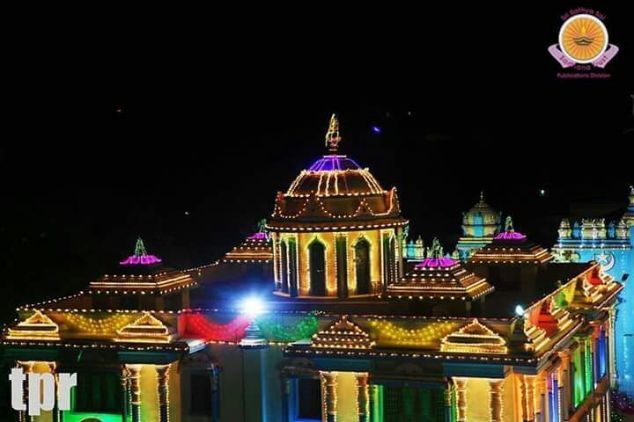
Light decoration at Prasanthi Nilayam #sathyasai #saibhakta 11 de novembro de 2017Saibhakta Brasil View on Instagram http://bit.ly/2hrpnxx
“`SAIRAM DEAR, “You do not have to struggle to reach GOD, but you do have to struggle to tear away the self-created veil that hides HIM from you” #sathyasai #saibhakta 11 de novembro de 2017Saibhakta Brasil View on Instagram http://bit.ly/2zvvrMi
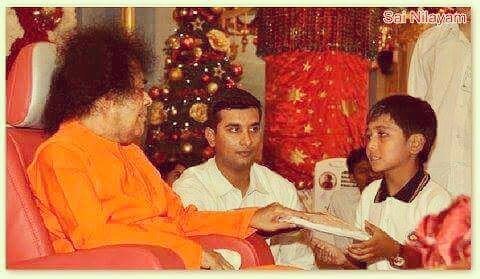
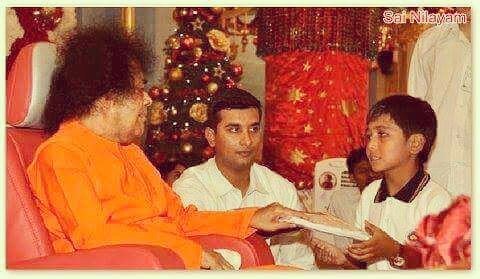
A few years back, a small boy was waiting in the Mandir portico with a card which was a painting of a few lovely roses on a paper and had three words written on it..We Love you.. Swami saw the card and said lovingly to the boy..“Bangaru, do not write ‘We Love You’ … you should write ‘I Love You.’…… Love is between God and you, and not a mass and God- ‘Heart to Heart; Love to Love. Sai Ram #sathyasai #saibhakta 11 de novembro de 2017Saibhakta Brasil View on Instagram http://bit.ly/2AzWqUN
Só existe uma Religião. A Religião do Amor! #sathyasai #saibhakta 8 de novembro de 2017Saibhakta Brasil View on Instagram http://bit.ly/2znm3KE
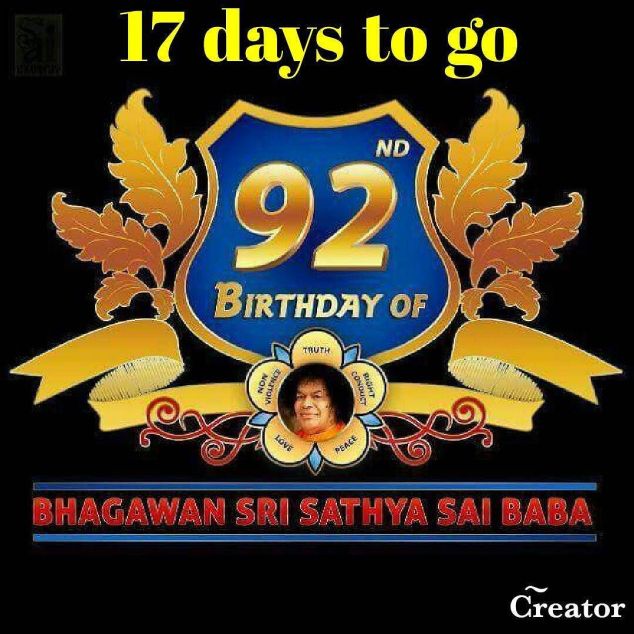
Logo 92 years ♡♡♡♡♡♡♡ #sathyasai #saibhaķta 8 de novembro de 2017Saibhakta Brasil View on Instagram http://bit.ly/2hQZh44
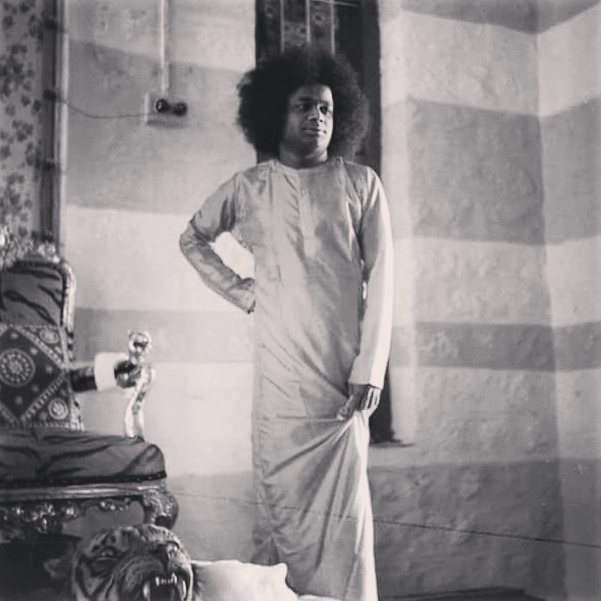
“TIGER-HUNTER CHIDED”. ×××× It was around noon one day when a driver in uniform was noticed striding into Puttaparthy. As he walked in, birds on the branches of the trees raised loud cries of fear and distress. Sathyam was sitting in the front of portico of Karanam Subbamma’s house conversing with his friends. As the driver stepped up there, the children scattered in fright. The man told Sathyam that his master’s Jeep got stranded on the other bank of the river Chitavathi. The master was in hot temper. Having heard that a boy of miracles was in the village, he had come to obtain some vibhuthi if it could get the master out of his problem. Sathyam agreed to follow him to the Jeep. The master was proudly stroking the dead body of the of a tigress, evidently shot by him in the forest. Sathyam said to him,”What harm has this poor animal done to you? Why have you killed it for no reason ? Her two little cubs are missing their mother and are feeling miserable. It was I who made your vehicle break down to make your realise this. Go back to those little motherless cubs, rescue them and entrust them to the care of a proper zoo. Never should you kill a living being for your own pleasure and enjoyment. You might shoot, but only with camera, not with a gun. That would bring you name and fame.” Surprisingly, the engine of the vehicle sprang to life with a mere touch of Sathyam and it went back the way it had come. Peda Venkama Raju, Sathyam’s father was in a panic situation at home. For defying an Englishman, that too, one who was sporting a gun, his little son might invite trouble from the police. On the other hand, the Englishman felt remorseful. Some time later, he brought the skin of the dead tigress and offered it to serve as a footrest for Sathyam. Even today it is there in Prasanthi Nilayam near Swami’s throne serving Swami as His footrest. Each and every incident of Swami’s life serves as a mirror reflecting the essentiality of Sathyam’s divine personality. Swami is the personification of ahimsa (principle of non-violence). Embodiment of compassion and pity for helpless creatures, He is Jesus Christ and Bhagvan Buddha personified. 8 de novembro de 2017Saibhakta Brasil View on Instagram http://bit.ly/2hkXW8z
❤️ OM SAIRAM ❤️ Today the world is facing a lot of problems because people are not doing enough Namasamarana. Let each and every street reverberate with the singing of the divine glory. May each and every cell of your body be filled with the Divine Name. Nothing else can give you the bliss, courage and strength that you derive from Namasamarana. Even if others make fun of you, ignore it, let it go! Everyone young or old, rich or poor, must do Namasamarana. Do it with all your mind and total dedication. Sing to the Lord without any inhibitions; only then can you experience divine bliss. You do not need any musical instruments – it is enough if you call Him from the core of your heart. Take care that you do not have evil thoughts as they will produce discordant notes. Then you will receive divine grace and energy. – Divine Discourse, 14 April 2002. #sathyasai #saibhaķta 8 de novembro de 2017Saibhakta Brasil View on Instagram http://bit.ly/2yeU6Rz
A few years back, a small boy was waiting in the Mandir portico with a card which was a painting of a few lovely roses on a paper and had three words written on it..We Love you.. Swami saw the card and said lovingly to the boy..“Bangaru, do not write ‘We Love You’ … you should write ‘I Love You.’…… Love is between God and you, and not a mass and God- ‘Heart to Heart; Love to Love. Sai Ram #sathyasai #saibhakta 8 de novembro de 2017Saibhakta Brasil View on Instagram http://bit.ly/2yhiz91
Answers from the Divine Guru Bhagavan Sathya Sai Baba …. Swami, Why did the Lord Himself come? Sai: When there is a small disturbance, a police constable is enough to put it down; when the trouble is threatening to develop into sizable proportions, a police inspector is sent; when it grows into a riot, the superintendent of police himself has to quell it; but when as now, all mankind is threatened with moral ruin, the inspector general comes down, that is, the Lord comes down with His army of saintly men and seekers #sathyasai #saibhakta 8 de novembro de 2017Saibhakta Brasil View on Instagram http://bit.ly/2j9nDJK
♡♡♡♡♡◇♡♡♡♡♡ ♡♡♡Allah Malik ♡♡♡ ♡♡♡♡♡♡♡♡♡♡♡ #sathyasai #saibhakta 8 de novembro de 2017Saibhakta Brasil View on Instagram http://bit.ly/2j9ol9Q
“Good feelings come from the heart…” Tuesday, November 7, 2000 (Evening) Swami gave Darshan at 2.15 pm. After the interviews, Swami came to the Ganesh Portico. Swami: (To Prof. Anil Kumar) Which village did you go to? Prof. A. K.: Swami, I didn’t go today. Swami: Why? You didn’t want to go or did they tell you not to? Prof. A. K.: No Swami, I am always ready to go. Swami: (Swami enquired with the Brindavan Warden about today’s Seva.) Today, the girls did well. They served 20,000 people. B. Warden : Swami, they did Nagar Sankeertan (congregational singing) and people poured water on the road. (It is a tradition to pour water whenever some religious procession is on the way.) Even Sathyanarayana Garu (Swami’s classmate) was waiting for us. They were saying, “Swami gave this water to us and we are giving it to His students”. Swami: Earlier in Bukkapatnam there was no water. I built a tank on the top of the hill. B. Warden: Swami, on the way, small children waved their hands saying ‘Sairam’. They have developed a feeling that we are their people. Swami: Yes, they should get that feeling. Warden: Swami, girls (students of the Anantapur Campus) did the work with sacred feelings. Swami: Yes, they did it with sacred feelings. But our boys have no feelings and no gratitude. Having no gratitude is being like an animal. The girls gave food packets to an old woman. In return, she gave them a few groundnuts that she had. That is gratitude. Good feelings come from the heart. The girls even went to the fields and gave food to the people working there. (Swami was feeling bad that excess food was ordered because of wrong estimation and was brought back. Swami enquired about tomorrow’s Seva programme.) B. Warden: Swami, even drivers are working with enthusiasm. Swami: Yes, when there is enthusiasm, anything can be done. In the Anantapur Campus, there are 800 students and 100 teachers. They formed groups of ten students. All were wearing saris of the same colour. Each group was led by a teacher. They are also white washing a temple. #sathyasai #saibhakta 8 de novembro de 2017Saibhakta Brasil View on Instagram http://bit.ly/2hltICd
A few years back, a small boy was waiting in the Mandir portico with a card which was a painting of a few lovely roses on a paper and had three words written on it..We Love you.. Swami saw the card and said lovingly to the boy..“Bangaru, do not write ‘We Love You’ … you should write ‘I Love You.’…… Love is between God and you, and not a mass and God- ‘Heart to Heart; Love to Love. Sai Ram #sathyasai #saibhakta 8 de novembro de 2017Saibhakta Brasil View on Instagram http://bit.ly/2zFieB9
Talk little, talk sweetly, talk only when there is a pressing need, talk only those to whom you must, do not shout or raise your voice in anger or excitement -BABA PD08112017 8 de novembro de 2017Saibhakta Brasil View on Instagram http://bit.ly/2zFNGzg
08 Nov 2017 THOUGHT FOR THE DAY What are the key steps every earnest aspirant must follow? Bhagawan lovingly guides us today. You must become your own tutor. Train yourself by using the spark of wisdom that has been implanted in you. Once you try with all your might, the Lord’s Grace will be there to help you forward. The first step in spiritual discipline is to cleanse your speech. Talk sweetly without anger. Do not boast of your scholarship or attainments. Be humble and eager to serve. Conserve speech and practice silence. It will save you from squabbles, idle thoughts and factions. Practice the attitude of joy when others are joyful and of grief when others around you are sad. Let your heart move in empathy. But the joy and grief have to be translated into service; they should not be mere emotions. When the sun rises, not all lotuses in the lake bloom; only the grown buds open their petals. Others await their time. It’s the same with people. Differences exist because of unripeness, but remember, all fruits will ripen and fall someday. Every being reaches its goal, however slow they walk or circuitous their road is! ( Divine Discourse, Apr 23, 1961) #sathyasai #saibhaķta 8 de novembro de 2017Saibhakta Brasil View on Instagram http://bit.ly/2hdx32G
A few years back, a small boy was waiting in the Mandir portico with a card which was a painting of a few lovely roses on a paper and had three words written on it..We Love you.. Swami saw the card and said lovingly to the boy..“Bangaru, do not write ‘We Love You’ … you should write ‘I Love You.’…… Love is between God and you, and not a mass and God- ‘Heart to Heart; Love to Love. Sai Ram #sathyasai #saibhakta 8 de novembro de 2017Saibhakta Brasil View on Instagram http://bit.ly/2zFwav6
Om Sai Ram Pranaam Swami #sathyasai #saibhakta 7 de novembro de 2017Saibhakta Brasil View on Instagram http://bit.ly/2hiA8lN
Talk little, talk sweetly, talk only when there is pressing need, talk only to those whom you must and do not shout or raise your voice in anger or excitement. Sri Sathya Sai Baba #sathyasai #saibhaķta 7 de novembro de 2017Saibhakta Brasil View on Instagram http://bit.ly/2zoThak
Worry and grief of one sort or another will always be there, in the past, present, and future, while walking, dreaming, and sleeping. But place faith in the Lord and do your tasks as dedication to Him and they will definitely vanish! Remember the Lord with thankfulness at least thrice or even twice a day; that will give you great peace. Do not give up your worldly duties, but do them with the name of God on your lips. Do not involve yourselves in the affairs of others to the extent that you get so entangled that you cannot extricate yourselves. Spend your time in the contemplation of the beauties of nature, which are spread out before you in earth and sky – lovely green expanses, soothing and joyful cool breezes, the panorama of coloured clouds and the music of the birds. Sing the glories of God as you walk along. Do not talk hatefully, do not get angry, do not disturb the sky with your shouts and curses, and do not pollute the air with vengeful boasts. (Divine Discourse, Sep 2, 1958) #sathyasai #saibhakta 7 de novembro de 2017Saibhakta Brasil View on Instagram http://bit.ly/2zmos5S
Servir Sempre, Ferir Jamais. #sathyasai #saibhaķta 7 de novembro de 2017Saibhakta Brasil View on Instagram http://bit.ly/2iBpAe3
“Oka Chinna Katha” by Bhagavan Sathya Sai Baba …….. Our faith diminishes because our ambitions are limitless. There was a rich person who had a daughter with a flat nose. The father wanted to get this girl married. Every person who came and looked at the girl used to go away, although they were tempted by the wealth. In those days, persons who could perform plastic surgery were not available. In desperation, he announced that he would give plenty of money to anyone who would marry his daughter. The marriage was performed, and thereafter the couple developed considerable faith in God. They visited many temples, went on many pilgrimages and bathed in many sacred rivers. They met a saint who advised them that he, who created the nose, alone, could bring it back to normal. Although they had lot of wealth, they were not happy at all. The girl used to feel others were looking at her and making fun. She suggested to her husband that they should both go to the lonely Himalayas and spend a month there in that manner. He agreed and they did go. The girl had a great desire to get back her nose, so she began to pray to God in great earnestness. God appeared, due to her good luck, and asked her what she wanted. As soon as God appeared, she asked for the grant of a good looking big nose. God said, so shall it be and granted her the boon. As soon as God disappeared, she looked at her face. She looked at the big nose and felt that she had become uglier than before. She prayed again more earnestly and God appeared again and asked her what she wanted. She said that she did not want that big nose. God said, so shall it be and granted her the boon. She immediately found that her nose had completely disappeared. The moral of this story is that although God is present before you, playing with you and talking with you, you do not know what to ask. #sathyasai #saibhakta 7 de novembro de 2017Saibhakta Brasil View on Instagram http://bit.ly/2hb0lPs
There’s one One Religion, The Religion of Love Sathya Sai Baba #sathyasai #saibhaķta 7 de novembro de 2017Saibhakta Brasil View on Instagram http://bit.ly/2zmea5N
What was the mistake that Ravana did and what can we learn from his life? Bhagawan lovingly reminds us today. Ravana had vast knowledge of spiritual texts. His ten heads represent the learning he had earned from the six Shastras (scriptures) and the four Vedas. But he never put that knowledge to any use. He craved for the possession of Prakriti (material objects) alone; he wanted to master the world of matter, the objective world. But he was not tamed by the spirit. He discarded the Purusha, the Lord; he was content with the possession at Lanka, of Prakriti (Matter), represented by Mother Sita. That was why he fell. Like the monkey which could not pull its hand from out of the narrow-necked pot, because it first held in its grasp a handful of groundnuts which the pot contained, people too are suffering today, as they are unwilling to release their hold on the handful of pleasurable things they have grasped from the world. One is led into the wrong belief that the accumulation of material possessions will endow them with joy and calm. But Divine Love alone can give that everlasting joy. – Divine Discourse, Feb 28, 1964. #sathyasai #saibhakta 7 de novembro de 2017Saibhakta Brasil View on Instagram http://bit.ly/2hbyrmw
Meaningless chanting of Mantras, visiting temples without thoughts of God, and breaking the coconuts before the idols with no purity in heart are spiritually useless.. Sri Sathya Sai Baba #sathyasai #saibhaķta 7 de novembro de 2017Saibhakta Brasil View on Instagram http://bit.ly/2yDgTec
Om Sai Ram “Untill the wound heals and the new skin hardens, the bandages must protect the place. So too, untill Reality is realised, the balm of faith, of holy company, and holy thoughts must be applied to the ego-affected mind. ” – Sri Sathya Sai Baba #sathyasai #saibhaķta 7 de novembro de 2017Saibhakta Brasil View on Instagram http://bit.ly/2zp2f9s
Watch your Words, Actions, Thoughts, Character, Heart #sathyasai #saibhaķta 7 de novembro de 2017Saibhakta Brasil View on Instagram http://bit.ly/2hbe5K9
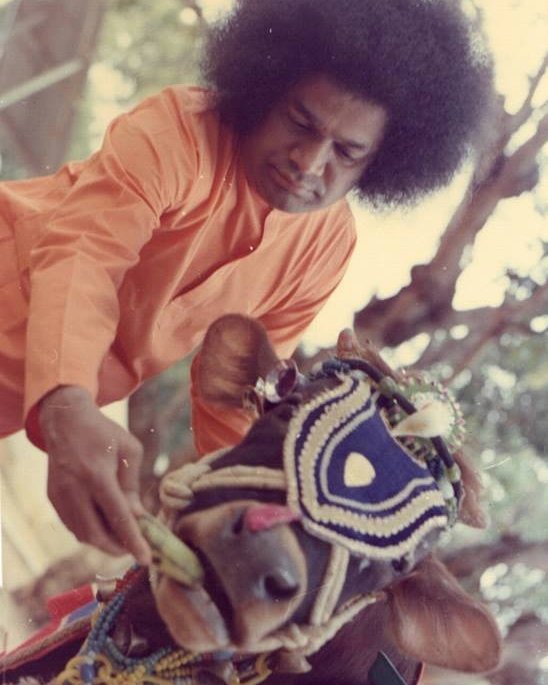
A Vaca é Sagrada na Índia. #sathyasai #saibhakta 7 de novembro de 2017Saibhakta Brasil View on Instagram http://bit.ly/2iB991i
“Man is basically, essentially, fully immortal. But yet he is afraid he would die! He is Ananda swaroopa, but he weeps as miserable. He is Shanti swaroopam, yet all over the world he is burdened with anxiety. This absured self deception is the root of the tragedy from which the world is suffering today. The truth has to be driven in to the consciousness of man.” Sai Baba #sathyasai #saibhakta 7 de novembro de 2017Saibhakta Brasil View on Instagram http://bit.ly/2yDob1j
God is Love #sathyasai #saibhaķta 7 de novembro de 2017Saibhakta Brasil View on Instagram http://bit.ly/2hgMmeF
“Oka Chinna Katha” by Bhagavan Sathya Sai Baba …….. A king used to ask three questions of all people who came to him. The first question was: 1. who is the best of persons? The second was: 2. what is the best time and the third, 3. what is the best of all actions? The king was very anxious to know the answers to these questions. One day, he went to the forest and was moving about the hills and plains. He saw an ‘âs’ram’ and wanted to take some rest there. By the time the king reached the âs’ram, a sadhu was watering some plants. The sadhu saw that the king was rather tired, stopped watering the plants, ran up to the king and gave him some fruits and cool water. At that time, an individual wounded all over the body was brought to the âs’ram by another sadhu. As soon as the sadhu saw this, he went to the individual, cleaned all his wounds and gave him some herbs which could cure the wounds. He was also telling him sweet words which could console the person. The king wanted to express his gratitude and take leave of him. The sadhu blessed the king but the king was still troubled by his three questions and wanted to see if the sadhu could enlighten him on that matter. The sadhu stated that the answers to the three questions were contained in the actions which the king had witnessed in the âs’ram. The sadhu said that when the king came to the âs’ram he was watering the plants and that was his duty. At that time, on seeing the king the sadhu had given up his duty and come to the king and gave him water and fruit. This was in accordance with correct traditions, as the king was his guest. While relieving the king of his thirst and suffering, another injured individual had come to the âs’ram and therefore the sadhu had given up the duty of serving the king and went to the other individual and began serving him. Whoever comes seeking service from you is the best individual at that time. Whatever satisfaction you can give him by serving him will be the best work you can do. The present, when you can do something, is the most sacred of all times. #sathyasai #saibhakta 7 de novembro de 2017Saibhakta Brasil View on Instagram http://bit.ly/2hhIkTa
❤️ OM SAIRAM ❤️ Today the world is facing a lot of problems because people are not doing enough Namasamarana. Let each and every street reverberate with the singing of the divine glory. May each and every cell of your body be filled with the Divine Name. Nothing else can give you the bliss, courage and strength that you derive from Namasamarana. Even if others make fun of you, ignore it, let it go! Everyone young or old, rich or poor, must do Namasamarana. Do it with all your mind and total dedication. Sing to the Lord without any inhibitions; only then can you experience divine bliss. You do not need any musical instruments – it is enough if you call Him from the core of your heart. Take care that you do not have evil thoughts as they will produce discordant notes. Then you will receive divine grace and energy. – Divine Discourse, 14 April 2002. #sathyasai #saibhakta 6 de novembro de 2017Saibhakta Brasil View on Instagram http://bit.ly/2ybHdb5
“I am always surrounded by purified souls” “I am always surrounded by purified souls. I accept garlands and My throne is decorated by garlands. Each garland has many flowers and each flower has many petals. All these petals are clubbed together because there is a thread inside the garland which keep all the petals join together, that is called selfless love. Each petal is a soul sent from My super soul, when all souls join together to adore Me, hence I accept them and place them on my heart.” – Bhagavan Sri Sathya Sai Baba #sathyasai #saibhakta 6 de novembro de 2017Saibhakta Brasil View on Instagram http://bit.ly/2hhrfJ1
Om. Sai Ram #sathyasai #saibhaķta 6 de novembro de 2017Saibhakta Brasil View on Instagram http://bit.ly/2yzMAFe
Sairam !!! Today is karthika bahula thadiya And karthika somavaraya Monday Today is our most loving Lord’s BIRTHDAY according to lunar calendar. Happy birthday 2 you Swamy. #sathyasai #saibhaķta 6 de novembro de 2017Saibhakta Brasil View on Instagram http://bit.ly/2hgvVPD
Why don’t we feel progress despite pursuing spiritual practices? Bhagawan clearly explains, so we may ruminate and practice earnestly from today. You see death snatching away persons from all around you, but you do not train yourself to meet it calmly, bravely, and gladly when it comes to you. Majority of people get glimpses of discrimination and detachment off and on, but they soon forget the call, ignore it or cover it up with excesses or excuses. One step forward and one step back — the journey does not take them far. Even if some do take up spiritual practices, steadiness is absent. Like a ball of thread that slips out of the hand onto the floor, and comes off loose because the grasp is not firm, practices fade away. Only steady effort will bring success here, as in every other case. How can you expect quick success in the control of the mind? It is very difficult to overcome its vagaries, for it is many-faced and very adamant. Steady perseverance alone will tame your mind, and it is only through a tamed mind that you can experience God. (Divine Discourse, Apr 23, 1961.) Anger breeds danger. Remove the roots of the weed of egoism from the field of your heart; that is true Sadhana -BABA Sathya Sai Baba #sathyasai #saibhakta 6 de novembro de 2017Saibhakta Brasil View on Instagram http://bit.ly/2h7Ams1
“Oka Chinna Katha” by Bhagavan Sathya Sai Baba …….. ONE STEADY DISCIPLE IS BETTER THAN THOUSAND WAVERING ONES We know that King Janaka [see also B.G. 3:20-21 & RRV-7a], even while performing ordinary worldly duties like ruling the kingdom and looking after the needs of the kingdom, found it possible to turn his thoughts completely towards the divine. The great rishi S’uka was once teaching several things to his disciples in a forest quite close to Mithilapura. Janaka learnt about this and wanted himself to become a disciple of S’uka and listen to his teachings. Janaka went to the forest, made obeisances to S’uka and asked that he be accepted as one amongst the numerous disciples S’uka had, and requested for permission to attend the classes. From that day, Janaka was conducting himself as one of the disciples. One day when he did not arrive in time, S’uka did not start his class and waited till Janaka arrived. He further told the other disciples that he was delaying the class for that reason. When the sage told the other disciples to wait till Janaka arrived, they murmured amongst themselves and told each other that they had joined this great sage only because it was believed he attached no special importance to kings and other powerful people. From that day, their faith in the guru started weakening. They also became envious of King Janaka. As soon as S’uka saw such envy and jealousy among his disciples, he decided to teach them a lesson. At an opportune moment, all the disciples were made to feel that the entire city of Mithilapura was in flames. Then each one of them began to think of the consequences, of the effect it would have on their houses, and ran to the city to salvage what they can. But King Janaka did not waver or move from his place. S’uka told Janaka that the flames appeared to have spread to the palace and he asked Janaka to go and save the inmates of the palace. Janaka was only smiling, thinking that God’s will shall be done and no one can change it. The envious students who ran to the city found that there were no flames at all and it was only a make believe. They came back and reported this to S’uka. They expressed surprise at the steady mi 6 de novembro de 2017Saibhakta Brasil View on Instagram http://bit.ly/2hK1gqA






 Saibhakta Brasil
Você precisa fazer login para comentar.